New Talents in Climate Research: Maarten Arnoldus
“My father is a magician, and I spent much of my childhood backstage, prepping props and watching illusions unfold. That early exposure to how things are made, and how they’re made to seem, gave me a lifelong instinct for questioning the obvious.”
30 January 2026
Is our collective imagination the determinant of what we can conceive?
“I study how everyday technologies shape how we relate to the environment. The electric vehicle, for instance, reassures us that the ecological crisis can be solved through innovation alone. My research asks: what does this faith in technological fixes reveal about how we imagine the future? And what possibilities do we overlook when we place so much trust in machines to solve the problems they helped create?”
Why these particular research questions?
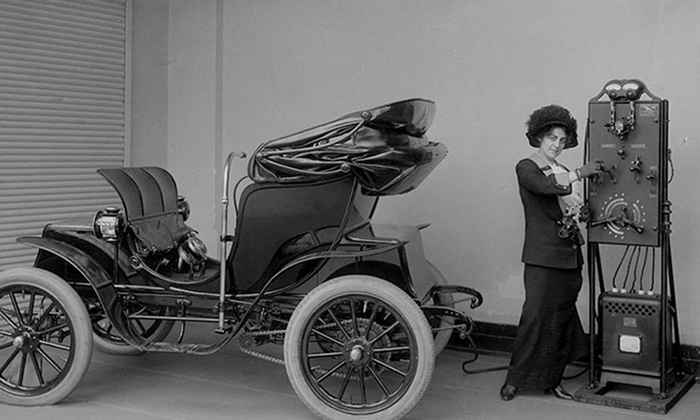
“Electric cars aren’t new; they've existed as long as gasoline cars. But they keep resurfacing during crises: after the oil shocks, 9/11, the 2008 crash, and now, the climate emergency. I’m fascinated by this repetition. When studied closely this reveals that our relationship to technology is symbolic as much as it is practical. The electric car acts like an affective object; consoling us in times of imbalance. Studying that pattern reveals how new technologies are routinely reconfigured to conform to the spatial and regulatory frameworks designed for earlier systems – thereby preserving the cultural logic of automobility under the guise of adaptation.”
My aim is to surface the assumptions that make some futures feel intuitive and others unthinkable.
What do you hope to achieve with your research?
“Transitions can falter when proposed solutions don’t align with the narratives through which we understand progress, or responsibility for that matter. Technologies don’t circulate in a vacuum – they become legible by attaching and reproducing existing moral and cultural frameworks. My aim is to surface the assumptions that make some futures feel intuitive and others unthinkable. By better understanding how cultural logics shape what counts as a solution, we can better imagine and roll out alternatives that do more than reproduce the present with different tools.”
Who do you work with?
“I work across departments in a highly interdisciplinary manner, which gives my research a lot of room to move between theory and historical analysis. At UvA, I work with scholars in history and cultural analysis, particularly those focused on environment, sustainable consumption, etc.
At the Rotterdam University of Applied Sciences, I collaborate with both large companies, like ING, Shell, and KLM, and smaller startups, sustainability initiatives, and local policymakers. These collaborations help me test how theoretical insights play out in real-world transitions. Often, the desire to act is there—it’s just not always fully tapped. I think an intimate knowledge of our collective imagination can help us push further with our interventions.”
In what stage of your PhD are you now?
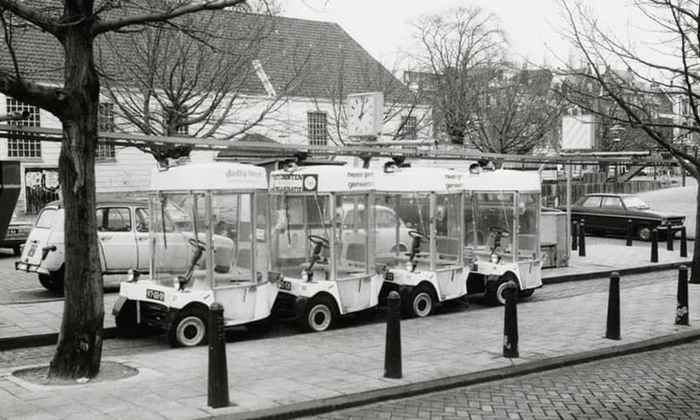
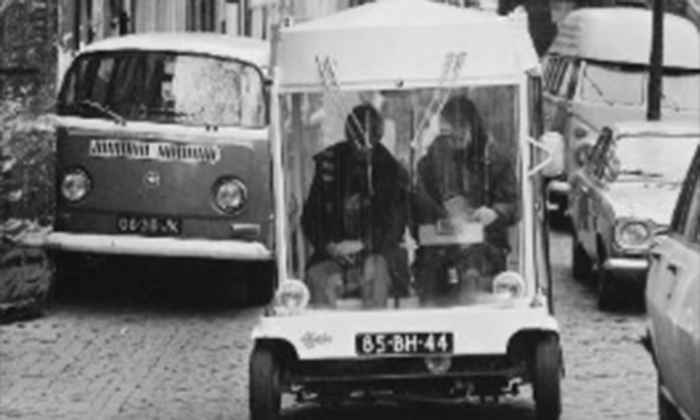
“My broader research examines how cultural logics attach to electric cars, shaping how societies negotiate ecological and infrastructural change. Within that frame, I’m finishing a chapter on the Witkar, an experimental electric mobility system launched in Amsterdam in the late 1960s. Its initiators, the Provo movement, were a media-savvy anarchist collective weaponising spectacle to expose postwar consumerist norms.
What fascinates me most is the small details that reveal an entire worldview. A small technical clause or a procedural decision can reveal how societies protect the fictions that hold them together.
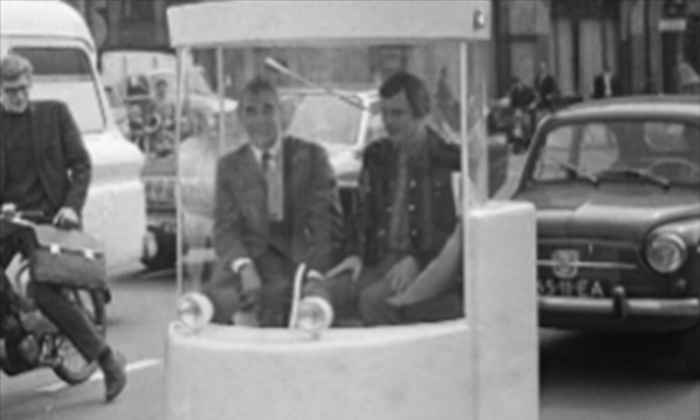
Early on in the debate about automobility in Amsterdam, their 1965 White Bicycle Plan had diagnosed automobility as a regime of spatial violence. Because the plan was ultimately shot down, Witkar attempted to reactivate that cultural logic, but reengineered it to function inside the logic of automobility itself. Designed by former Provo activist Luud Schimmelpenninck, it redesigned the car as a slow-moving, and deliberately unglamorous system—what the designers called a “fragile shell,” and onlookers “a rolling telephone booth.”
Which phase of the research do you find most interesting?
“What fascinates me most is the small details that reveal an entire worldview. A small technical clause or a procedural decision can reveal how societies protect the fictions that hold them together.
A 1972 meeting of the municipal government in Amsterdam’s city hall is a perfect example. On paper, it was a practical negotiation over the Witkar’s road rights and whether these small electric vehicles could legally circulate. In practice, it became a confrontation between two incompatible realities. The police and the RDW appealed to a newly revised Article 66 of the Dutch traffic code, a rule only a few weeks old at the time, defining what qualified as an automobile. They insisted that the Witkar’s limited speed, around 20 km/h, made it unsafe and incompatible with ‘the free flow of traffic’. The Witkar cooperative argued the opposite: that the city’s streets were already immobilised by congestion, and so no car could really top that speed anyway.
What makes this moment so rich is that both sides were arguing about ‘traffic’, but only one side was arguing about material reality. The police invoked an imagined order, the car as a vehicle of freedom, velocity, and autonomy, an ideal already impossible in 1970s Amsterdam. They were defending not infrastructure as it existed, but infrastructure as it was supposed to exist.
This is where the confrontation turned: the Witkar was now being processed into this regulatory apparatus. Through seemingly neutral demands for license plates, insurance, and compliance with automobile standards, the system absorbed the Witkar as a deviation requiring correction, effectively neutralising the fragility it had attempted to force the system to reconcile with.”
What is the most challenging aspect of this stage?
“One challenge has been letting go of certain interpretive habits, especially the impulse to frame everything in terms of success or failure. I was trained in a critical tradition that often reads cultural phenomena as either utopian or doomed. But that lens can flatten the story. The real question isn’t whether it worked; it’s what its treatment reveals about how societies negotiate change. I’ve had to learn to read more patiently: to see technologies not as solutions or failures, but as arenas where ideas about the future are contested.”
What character traits are you most proud of?
“I’ve always had a talent for seeing through appearances. My father is a magician, and I spent much of my childhood backstage, prepping props and watching illusions unfold. That early exposure to how things are made, and how they’re made to seem, gave me a lifelong instinct for questioning the obvious.”