How can we maintain a healthy public debate in the digital age?
28 November 2025
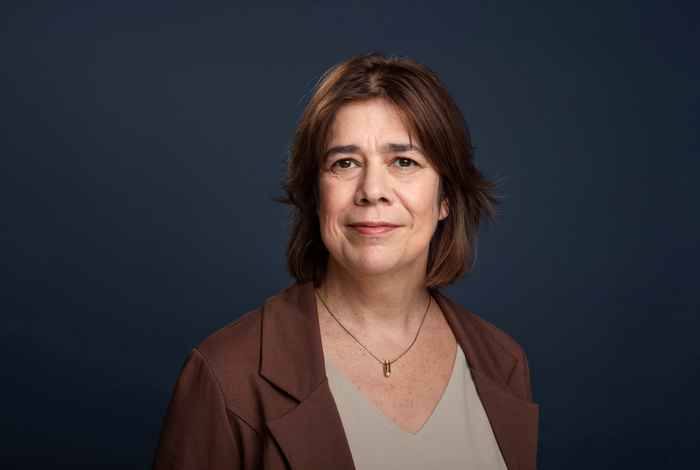
At the end of last century, digitisation raised great hope: scholars and citizens saw the internet as an important tool to strengthen democracy. ‘The internet was seen as a space where anyone could participate, where information could be shared freely and globally, and where new voices would be heard’, says Roovers. ‘It seemed as if the philosophical ideal of an open, critical debate could finally become a reality.’
Drastically changed media landscape
However, the reality turned out to be more complex. Roovers, who was involved in public debate herself as editor-in-chief of Filosofie Magazine, Denker des Vaderlands (Philosopher Laureate) and member of the Dutch Senate, saw how digitisation not only offered opportunities, but also presented new challenges.
‘The rapid dissemination of information, the emergence of social media and the influence of algorithms drastically changed the media landscape’, she says. ‘The question is: how can we ensure that public debate remains critical and reliable in this fragmented online world?’
How public discussions are conducted
In a healthy public debate, ‘throughput legitimacy’ plays an important role, argues Roovers in her doctoral thesis. The debate is often judged on two aspects: who takes part in it (input) and what it yields (output). Roovers: ‘However, there is a third, often overlooked, aspect: the process itself (throughput). That concerns how public discussions are conducted. How is the confrontation between different viewpoints organised, and which role do information and expertise play in the debate? It is precisely that process which determines whether a debate is truly critical.’
Influencers during the COVID-19 pandemic
Roovers also examined the extent to which new players from outside the traditional media, such as influencers, activists and independent investigative journalism networks, can contribute to a resilient and inclusive public debate. For example, she examined the case of influencers who were used by the government to reach young people with health advice during the coronavirus crisis.

Influencers' role during the COVID-19 pandemic often remained limited to passing on pre-approved government messages, without critical discussion.
‘Their role often remained limited to passing on pre-approved government messages, without critical discussion’, says Roovers. ‘That led to accusations of manipulative reporting and propaganda. This example demonstrates that it is not enough to disseminate information; there also needs to be room for debate and reflection.’
Climate activists challenge the media
Another case that Roovers examined, namely that of climate activists, illustrates that a different approach is also possible. Roovers: ‘Activists from Extinction Rebellion, for example, challenged the media by denouncing editorial choices that downplayed climate change. This shows that activism not only adds new voices to the debate, but can also even improve the quality of the debate.'
According to Roovers, independent investigative journalism initiatives, such as Bellingcat and the International Consortium of Investigative Journalists (ICIJ) are also examples of how cooperation and transparency can contribute to a more reliable and more critical debate.
Room for new insights and controversy
In her doctoral thesis, Roovers concludes that we need to review our standards for a critical public debate. According to the doctoral candidate, it is not enough to just look at who is taking part and what the debate yields: ‘How the debate is conducted is just as important: whether there is room for controversy, how arguments are tested and if the debate is open to new insights. Through my research, I hope to stimulate discussion about what is needed for public opinion formation in the digital era.’