Unearthed: Science and Environment across Mineral Frontiers
Book preview
- Date
- 12 March 2026
- Time
- 12:00 -13:00
- Location
- Bushuis/Oost-Indisch Huis
- Room
- E 1.01E
Dr. Patrick Anthony is a Marie Skłodowska-Curie postdoctoral fellow in the department of History of Science and Ideas at Uppsala University. He is currently editing special collections on survey sciences at the edges of Russia’s colonial empire for History of Science with Catherine Gibson and on logics of elimination in global settler colonialisms for Settler Colonial Studies with Youssef Mnaili. His current research explores Imperial Russian programs of astronomy, geophysics, and climatology in the nineteenth century, juxtaposed with the Islamic sciences of central Eurasia. Patrick received his PhD in History from Vanderbilt University in 2021 and held postdoctoral positions in the Germany, the UK, Hungary, and Ireland. He is now a research partner in the projects Instructing Natural History: Nature, People, Empire (Uppsala University) and (Tartu University) Entangled Borderlands: Mapping Intra-Imperial Connections for a New Spatial History of the Romanov Empire.
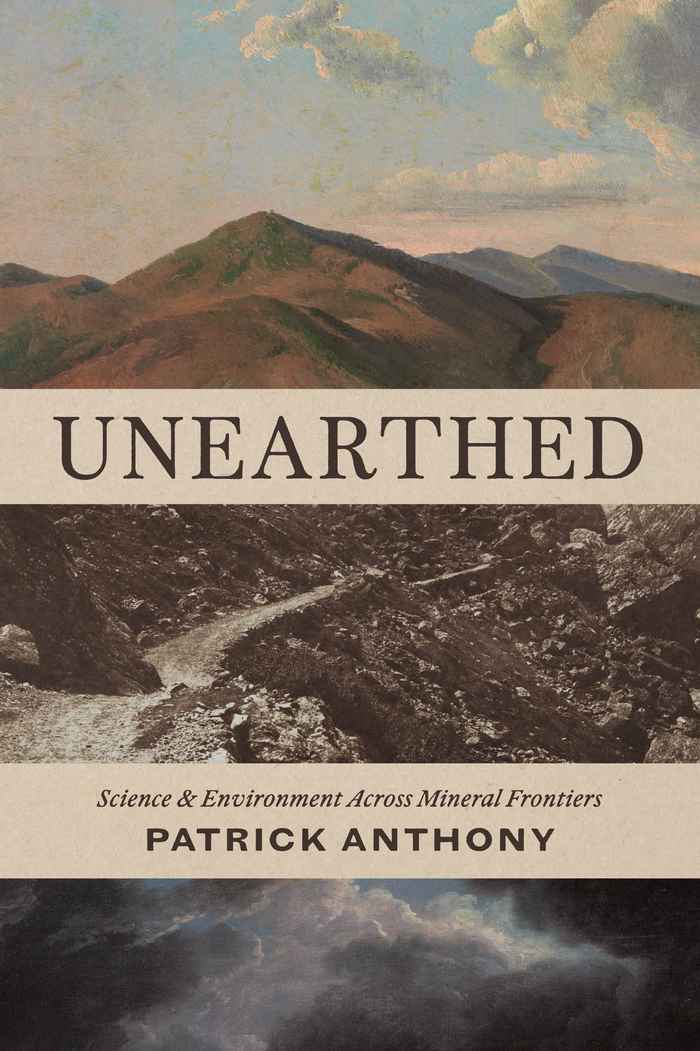
His book, Unearthed: Science and Environment across Mineral Frontiers, forthcoming with the University of Chicago Press in Spring 2026, tells the story of earth and atmospheric sciences assembled across world mineral frontiers in the nineteenth century and demarcates a critical juncture in the long durée of anthropogenic climate change. Unearthed depicts a pivotal moment during the nineteenth century: as European and settler schemes to govern ever larger territories intensified, the earth and atmospheric sciences were also becoming more global in scope, assembling models of the planet while making use of militarized or highly industrialized systems. These efforts were informed by the physique du monde, or global physics, of Alexander von Humboldt (1769–1859), a program of vast data collection that spanned four hemispheres that aimed to determine general, scientific laws about the planet and its environments.
Using Humboldt’s itineraries as a frame, Unearthed traces an information order that linked far-flung industrial sites and frontier stations, from Prussian provinces to the Spanish and Russian empires. Humboldt intersected with Saxon miners, Mexican cartographers, and Siberian surveyors, among other itinerant Germans who mobilized the labor and resources of widespread mining operations for global surveys of earth and air. Interweaving the histories of capital and climate, Patrick Anthony takes readers from mines to mountains to show how the sciences of Humboldt’s circuits both measured and made modern natures. These sciences of the mineral frontier, he argues, ultimately laid the groundwork for carbon-intensive economics and a logic of unending extraction. Wide-ranging and ambitious, Unearthed will interest scholars working in the history of science, global history, and the environmental humanities.
The book preview will be commented on by dr. Mathijs Boom.