Trauma and Affect
- Date
- 23 June 2026
- Time
- 17:00
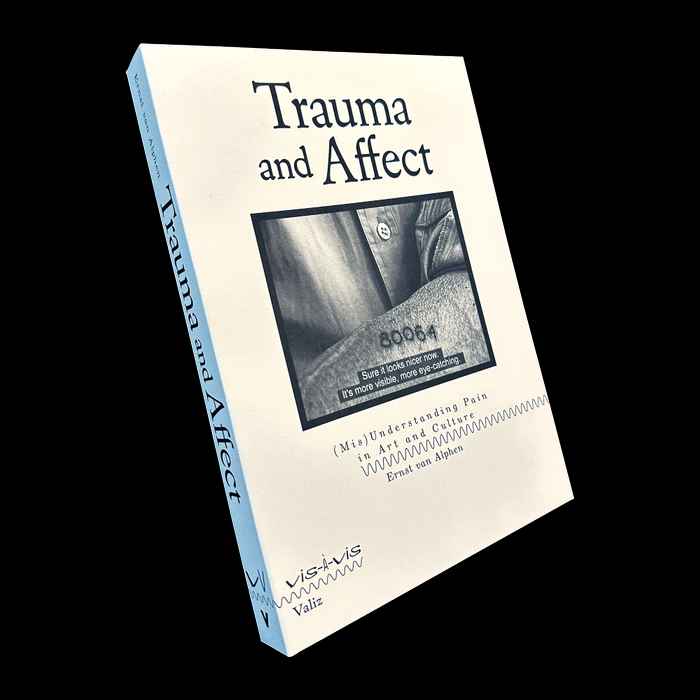
Trauma and Affect
Given the many current wars and conflicts, it is crucial to understand how trauma works, how it is stored in our bodies, and how it manifests itself time and again. In this programme Ernst van Alphen, Ihab Saloul, Eugenie Brinkema, and Ronald Ophuis engage in a dialogue regarding Van Alphen’s latest book, ‘Trauma and Affect’, in which he explores the power of these concepts through art and literature.
Trauma and affect: both concepts have become increasingly important in the critique of art, literature, and culture since the 1990s. The concepts have been used in many different ways and disciplines, including queer studies, feminism, cultural analysis, art criticism, literary studies, and postcolonial studies, as well as sociology and economics. However, with the current tendency to easily use the concepts in relation to everyday events, they have suffered from inflation. This led to widespread confusion: the terms have been overused and exhausted, thereby losing their critical power.
Ernst van Alphen, Ihab Saloul, Eugenie Brinkema, and Ronald Ophuis will engage in a discussion, posing questions such as: what relevance and critical power do the concepts hold today? And how are they intertwined?
The guiding of this program is Van Alphen’s new book titled Trauma and Affect: (Mis)Understanding Pain Through Art and Culture (Valiz, 2026). Through the lens of visual artworks, literature, and cinema, Van Alphen explains how trauma originates in the past and what explains its re-enactment in the present. In addition, he discusses artists who develop strategies that process affect into critical making and thinking.
The work of visual artist Ronald Ophuis demonstrates how the ideas of trauma and affect are made productive, a proposition that will be explored in greater depth during the panel discussion.
Valiz’s founder and director Astrid Vorstermans will open the programme with a short introduction.