Marks, Media, Forms: Modernism, Expanded Universe, a Working Ledger
- Date
- 26 June 2026
- Time
- 09:00 -17:00
- Location
- University Library
- Room
- Ruyszaal, University Quarter Library
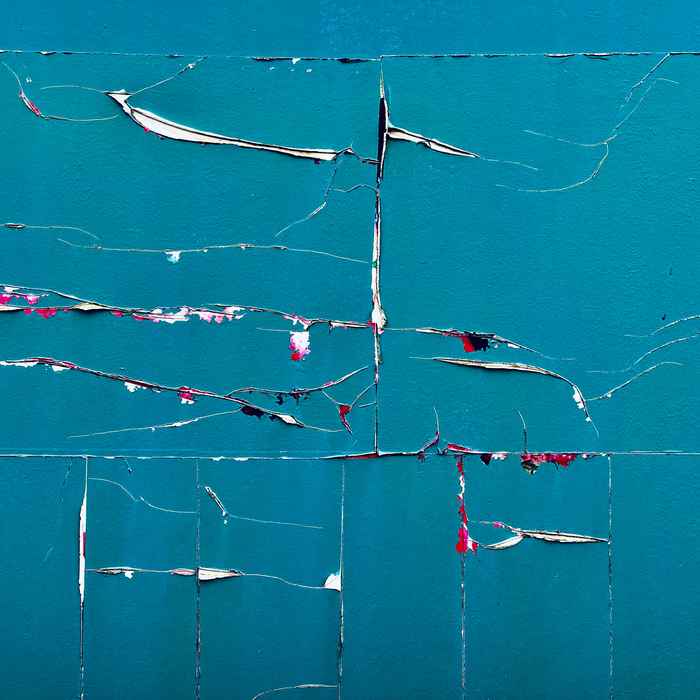
George Spencer-Brown's Laws of Form (1969) and Jacques Derrida's "Law of Genre" (1980) are both concerned with the media theoretical concern of marking the limits of medium, and both discover, at their edges, forms of re-entry: the mark that marks marking, the genre that participates in genres to which it cannot belong. Before them, Fritz Heider's "Thing and Medium" (1926) and Leroi-Gourhan's Gesture and Speech (1964–65) ask, respectively, why perception works at all and why it is always risky: the medium works by disappearing, and when it stops disappearing, the perceptual contract frequently breaks down in interesting ways. Leroi-Gourhan runs this boot-strapping technics backward through forty thousand years (the body is not where mediation ends but where it is resisted, the archaic loop of hand and brain holding against the forced rhythms of exteriorization) and to read him carefully is to find Derrida already latent, the whole theory of the trace implicit in Gesture and Speech. Re-entry names the moment a medium begins to behave like a thing, when it draws attention to itself as medium. It names, against Leroi-Gourhan, the moment forced rhythm is reanimated as free vibration, the genre-law of the human inhabited rather than merely obeyed. The symposium's question is also Leroi-Gourhan's: what does it mean to keep a gestural hand in a world whose every technical and social pressure pushes/projects transparency?
Participants:
- Michael Miller (UvA)
- Rudolph Glitz (UvA)
- Meg Cook (Florida State University)
- Cristina Iuli (University of Eastern Piedmont, Italy)
- Daniel Irrgang (Leuphana University of Lüneburg)
- Aaron Jaffe (Florida State University)
- Merinda Simmons (University of Alabama)
- Ed Dallis-Comentale (Indiana University)
- Stephan Besser (UvA)