The ‘Elite’ As Delicate Beast: Vexed conversations about what we mean when we invoke the so-called ‘elite’
- Start date
- 13 April 2026
- End date
- 14 April 2026
To sign-up for in-person or livestream, check: https://www.spui25.nl/programma/the-elite-as-delicate-beast
Tuesday, April 14, 12 – 3 pm | NICA 1-credit seminar: PCH zaal 1.04
Like many terminologies, the ‘elite’ offers a point of critical contact, especially for justice-oriented, left-leaning, and/or democratic cosmopolitan ethical stances, regardless of religious or secular leanings (e.g. as varied as Christian Democrat or Marxist). Yet, what do we really mean when we invoke ‘the elite’? How to theorize the great chasms between and among the so-called intellectual elite, the “morally repugnant elite” (Kenneth Freed, 1994, LA Times), the colonial elite, the nouveau riche, the post-colonial elite, and even so-called ‘Mercedes Marxists’? Can we continue to ignore what it means to think of ‘the’ elite as a single category of analysis? See longer description and bios of conversants below.
This three-hour NICA seminar is meant as a conversational space. Each speaker will offer just a five minute intervention, and from there we will go into Q&A, with the speakers.
NICA 1-credit:
- To sign-up for the NICA Seminar, please fill this form out: https://docs.google.com/forms/d/1pq3LbXXgqxiB_T_GU--ORBbi3sxen-aCzcrqSki_AFA/edit
- The three readings will be sent to you by April 1. Pick 2 quotes from two of the readings that interest you, or compel you. Explain why they interest you; why you agree or disagree with them. Send to a.benedicty@uva.nl
Like many terminologies, the ‘elite’ offers a point of critical contact, especially for justice-oriented, left-leaning, and/or democratic cosmopolitan ethicals stances, regardless of religious or secular leanings (e.g. as varied as Christian Democrat or Marxist). Yet, what do we really mean when we invoke ‘the elite’? How to theorize the great chasms between and among the so-called intellectual elite, the “morally repugnant elite” (Kenneth Freed, 1994, LA Times), the colonial elite, the nouveau riche, and even so-called “Mercedes Marxists”? Among the most vexed patterns that scholars have noted in the decades since the mid-twentieth century independances that ensued from anti-colonialism across the globe are the following:
- The intellectual elite in the early and mid-twentieth centuries, often Marxist-leaning had the financial means to seek exile in Europe and North America. Often unable to return to their home country, they have contributed to a “brain drain,” in their country of birth and/or affective affinity (for those who reside (with or without official citizenship) in their host country.
- From the perspective of those who did not belong to this ‘original’ elite (favored by the colonial power in question), national identity has often taken on a primary role in articulating the new state. In turn this national identity has often taken expression through ethnicized and/or racialized terms. The tension then between class and race has led to what some name fratricide, and even genocide, and without a doubt gender-based violence. And, these themselves often obscure the role of major world powers in supporting a given dictatorial or totalitarian regime over another system of governance.
- As we think through Marxism, decolonial thought, and the legacies of the colonial, how and why is the question of ‘the’ elite still a taboo conversation, the proverbial elephant in the room?
- What does it mean to focus-in on the hopeful moments of Marxist solidarity across the globe that took place in many of the decades of the twentieth century, but whose circumstances of possibility are shaped by the pragmatic (and tragic) realities of late capitalism? How does re-thinking the elite as a critical category of analysis reshape how we might address these tragedies?
- Can we continue to ignore what it means to think of “the” elite as a single category of analysis?
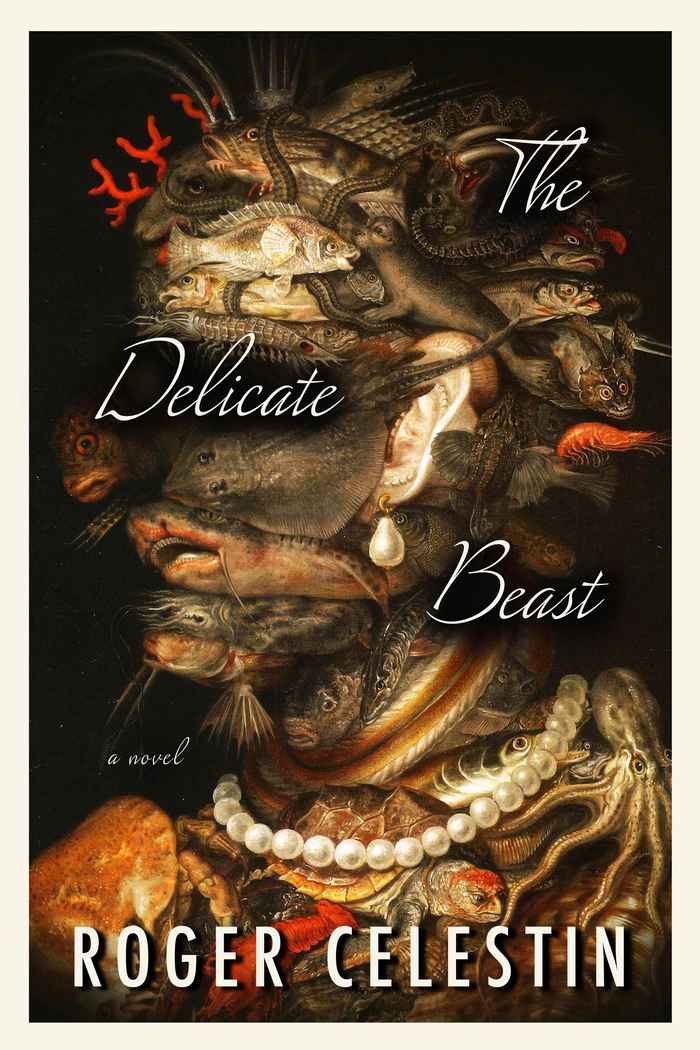
We take our cue from from Roger Célestin’s recent novel, The Delicate Beast (2025, Bellevue Literary Press, just named among the PopMatters Best Books of the Year). We are honored that Célestin has accepted our invitation, so as to converse and think together through the complex relationships between and among cosmopolitanism(s), intellectualism(s), proletarianism(s), post-colonialism(s) and neocolonialism(s).
This event is part of the Research Priority Area, Decolonial Futures. We engage a line of conversation that is quite central to postcoloniality, the very idea of subaltern studies that lay at the heart of that historiography. We interrogate what we see today as the proliferation of decolonial studies and the figure of the intellectual/the historian/the artist/the critic in these complex conversations. Along with ASCA, NICA, and Spui25, we contribute to the Decolonial Futures RPA’s ongoing roundtables and publication efforts to think through the foundational social histories and critical-theory lines of analysis on who speaks, and how.
Dr. Roger Celestin is professor emeritus of French and Francophone Studies at the University of Connecticut; he has also taught at Barnard College, Columbia University and MIT. He is the author of several scholarly books, including From Cannibals to Radicals: Figures and Limits of Exoticism and Universalism in Crisis: France from 1851 to the Present. The Delicate Beast is his first novel. He is founder and editor in chief of Contemporary French and Francophone Studies/SITES.
Dr. Nosa Imaghodo is a lecturer in the Academic Core and Social Sciences and a tutor at Amsterdam University College. He holds a PhD in Sociology from the University of Essex, a Master's degree in Social Research Methods from the University of Surrey and another Master's degree in Politics from The University of Hull. For his PhD, Nosa sought to investigate solutions to racism in Britain by conceptualising how Black British anti-racism campaigns and activism assist our understanding of the depth of racism and what strategies they proposed to eradicate it.
Dr. Alana Osbourne is Assistant Professor of Critical Studies at Radboud University. An anthropologist and filmmaker, her work engages sensorial anthropology, postcolonial studies, and Black geographies. She examines the material and affective legacies of coloniality, focusing on urban inequalities, race, memory, and the entanglements of museums, inorganic matter, and outer-space travel. Her ethnographic research includes Kingston, Jamaica and Brussels, Belgium. Osbourne also combines academic inquiry with film and theatre projects.
Dr. Niall Martin teaches in the department of Literary and Cultural Analysis at the University of Amsterdam. His PhD research on the political and aesthetic function of noise was published as Iain Sinclair: Noise, Neoliberalism and the Matter of London (Bloomsbury, 2015). More recently he co-edited with Ilios Willemars The Replaceability Paradigm: From Dante to Deep Dream (DeGruyter, 2025) whose essays consider the ways that ideas of replaceability operate within a range of contemporary discourse, including organizing concerns about technology and race.
Rita Ouédraogo is an Amsterdam-based curator, art and culture consultant, researcher, and writer who has built a practice at the intersection of arts and research. Drawing on Black feminist pedagogies and memory work, she interrogates colonialism and its afterlives in Europe and the Caribbean, while challenging institutional power. Her work amplifies narratives of marginalized publics through archives, critical pedagogies, and collaborative methodologies that operate both within exhibition spaces and beyond them. She is co-founder curator of Buro Stedelijk, the Stedelijk Museum Amsterdam's project space showcasing the city's dynamic contemporary art scene. As chair of the Mondriaan Fund of the Netherlands and board member of Kanaal40, an online and offline (micro)pop platform, she shapes cultural policy and alternative networks.
Dr. Sanjukta Sunderason works at the interfaces of twentieth-century aesthetics, socialist thought, and histories of Afro-Asian decolonization. She is the author of Partisan Aesthetics: Modern Art and India’s Long Decolonization (Stanford University Press, 2020) and co-editor (with Lotte Hoek, University of Edinburgh) of Forms of the Left in Postcolonial South Asia: Aesthetics, Networks, and Connected Histories (Bloomsbury, 2021). She teaches art history at the University of Amsterdam, and co-cordinates the university’s Research Priority Area, Decolonial Futures.
Dr. Carine Zaayman is Researcher and Research Coordinatorat the Research Center for Material Culture at the Wereldmuseum (Netherlands). She is the author of Seeing What Is Not There: Figuring the Anarchive (2026). As an artist, curator and scholar, she is committed to critical engagement with colonial archives and collections, specifically those holding strands of Khoekhoe pasts. Her work focuses on the afterlives of slavery and colonialism, particularly in the Cape, by bringing intangible and neglected histories into view. Her research aims to contribute to a radical reconsideration of colonial archives and museum collections, especially by assisting in finding ways to release their hold over our imaginations when we narrate the past, as well as how we might shape futures from it.
Moderator: Dr. Alessandra Benedicty-Kokken is University Lecturer at the University of Amsterdam’s Amsterdam School for Cultural Analysis (ASCA) in Literary and Cultural Analysis and also maintains an affiliation with the City College of New York’s Center for Worker Education. She has engaged a double career, working in the cultural sector (French Embassy, Québec Government House, het Wereldmuseum) and academia. Most recently she has co-written: an article on filmmaker Maïwenn, and an article on Tracy Chapman. She serves as co-book review editor of the Journal of Haitian Studies, and serves on the jury of the Albertine Translation Fund
Cover Image:
- Title: Water
- by: Giuseppe Arcimboldo
- Date: 1566
- Style: Mannerism (Late Renaissance)
- Series: The Elements
- Genre: allegorical painting
- Media: oil, wood
- Location: Kunsthistorisches Museum, Vienna, Austria