Estrangement on a Strange Planet
- Date
- 21 May 2025
- Time
- 17:00 -18:30
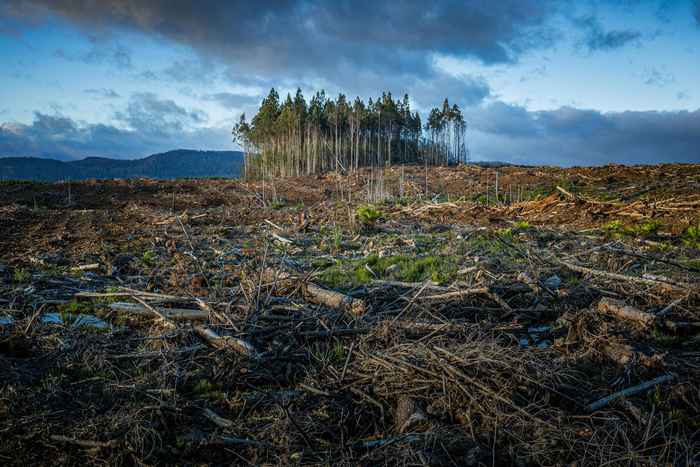
In this lecture, I explore the ways in which the Anthropocene affects one of the key functions of narrative art: the production of estrangement. Building on Eva Horn’s work, I show that, on a climate-changed planet, latency (“slow violence”), the entanglement of human and more-than-human worlds, and a clash of spatial and temporal scales pose new formal challenges to the repertoire of literature (and other artforms). These challenges are instructive beyond literary studies insofar as they also concern the emancipatory impact that experiences of estrangement are supposed to exert on readers and spectators, allowing them to see their ordinary habits from unexpected angles and thereby enabling them to transform their alienated life-worlds. Since, as Svetlana Boym reminds us, defamiliarization has both an aesthetic and a political dimension, what role should it play on a planet that is already so strange that we are now not only facing various problems of collective action, but also a veritable crisis of imagination? My argument will be that, if estrangement devices are to occupy a central role in the aesthetics and politics of the Anthropocene, they need to become attuned to its specific nature. And that is, unsurprisingly, a difficult endeavour, which partly explains why it is so hard to undo the currently dominant social imaginaries of business as usual, solutionist techno-fixes and apocalyptic fatalism. I illustrate this claim by engaging with a number of recent novels and films that deal with the themes of extinction and oblivion on our climate-changed planet.
Professor Mathias Thaler is Professor of Political Theory in the School of Social and Political Science at the University of Edinburgh. His main research interest is in contemporary political theory. Thaler regularly teaches courses on democratic theory, populism, human rights and the morality of war and violence. From 2020 to 2023, he served as Co-Director of Research in the School of Social and Political Science. From September 2024 to June 2025, Thaler is in residence as a Fellow at the Swedish Collegium for Advanced Study (Uppsala) and the Netherlands Institute for Advanced Study (Amsterdam). Thaler is the author of No Other Planet (Cambridge University Press 2022), Naming Violence (Columbia University Press 2018), Moralische Politik oder politische Moral? (Campus 2008), and co-editor (with Mihaela Mihai) of Political Violence and the Imagination (Routledge 2020) and of On the Uses and Abuses of Political Apologies (Palgrave 2014). His papers have appeared in peer-reviewed journals such as the American Political Science Review, British Journal of Political Science, Environmental Politics, European Journal of Political Theory, Perspectives on Politics, Political Studies, Political Theory, and Review of Politics, amongst others. His recent research has been funded through a Marie Curie Career Integration Grant from the European Commission (2013–2017), through a Research Fellowship from the Leverhulme Trust (2020–2021) and through an AHRC Networking Grant (2023–2025). Thaler has also received competitive awards from the Austrian Academy of Sciences, the Theodor Körner Fonds and the Gulbenkian Foundation, as well as smaller funders. Over the past ten years, Thaler has held visiting fellowships at the University of Oxford, the Université de Montréal, KU Leuven and the University of Sydney.