Useful Television in Britain in the Interval of Uncertainty, 1928-1939
- Date
- 21 February 2024
- Time
- 17:00
Tuesday, 21 February 2024, 5pm CET, online (for a link please register here)
John Wyver
Useful Television in Britain in the Interval of Uncertainty, 1928-1939
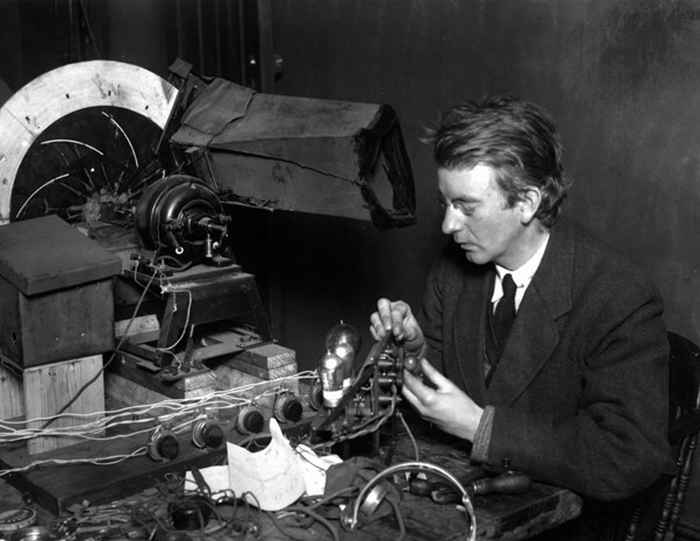
John Logie Baird’s company began regular 30-line broadcasts to domestic receivers in the autumn of 1928. Responsibility for these was taken over by the BBC in the summer of 1932 and they continued for a further three years. The BBC then operated the far better documented daily ‘high definition’ 405-line service at Alexandra Palace from early November 1936 to the outbreak of the war.
In parallel with these activities there was a range of speculations, such as video telephony, and practical achievements with alternative applications of television technology. Realisations included Baird’s explorations of Noctovision, an in-store television circuit at London’s Selfridges department store, the extensive roll-out of cinema television, and early military applications.
Drawing primarily on the trade press of the time, as well as files from the BBC Written Archives Centre and the National Archives, this presentation offers an overview of these applications during what David Trotter has identified as ’the interval of uncertainty, when the new medium had arrived, but nobody yet knew what it meant’ (Literature in the First Machine Age, 12).
John Wyver is Professor of the Arts on Screen, University of Westminster, and a producer and director of broadcast television and related media. His documentaries about the arts and digital culture, and his screen adaptations of theatre and dance, have been honoured with a BAFTA Award, an International Emmy and a Peabody. He is the author of Vision On: Film, Television and the Arts (2008) and The Royal Shakespeare Company on Screen: A Critical History (2019), and he is currently working on a cultural history of British television before World War Two.
The Useful Television Standing Seminar (organized by Anne-Katrin Weber, University of Lausanne, and Markus Stauff, University of Amsterdam) aims to facilitate the exchange between scholars interested in television’s application as a useful tool, rather than a mass medium. The examples range from military and industrial applications of television technology to its operational use in medicine, science, or sports. We partly build on older debates in film studies (e.g. non-theatrical cinema; useful film) and want to bring television into this debate. Looking at useful television requires to broaden and to complicate our understanding of what media do and how they do it. Additionally, it contributes to an alternative genealogy of “digital media”. The seminar organizes two or three meetings per semester for which we invite guest speakers, discuss the participants’ work in progress or new and old publications that seem of relevance.