2026 ASCA Awards
7 June 2026

ASCA Dissertation Award: Yvette (Lok Yee) Wong, Wenyi and Its Discontents: A Study of Creative Practices and Politics in Hong Kong
“Time will pass while our voice will last”
This is the opening quote from the abstract of this year’s Best ASCA Dissertation award. As someone still on my own painstaking journey of completing my dissertation, I was awed and equally motivated to not only read this year’s winning dissertation, but also the numerous dissertations produced by our illustrious PhD candidates – slash recent awarded Doctors. The competition was very tough and this award is certainly not given lightly. In that regard, I would personally like to thank and congratulate all of the candidates who defended their dissertations with integrity, grit and dedication and the various research they poured their whole hearts into complete. The dissertations from this year covered various theories, philosophies and empirics. Including old age and growing older; the ways writers create texts; the cultural policy and frameworks of producer-distributor relationships; theorising tonal jazz; dramaturgies and the Anthropocene; an examination of composers persecuted by the Nazis; clowning as an embodied performance, how openness, criticism and transparency can strengthen our public spheres; the role of prophecy and its influence on politics, culture, and national identity; how the culture of silence recreated in the aftermath of a disaster can stunt the revitalization of commemorative practices; how cybersecurity knowledge is produced and the ways this knowledge shapes political and social realities; the vibrancy of imagined futures of the Sinophone spheres; the interplay of environmental, technological, and socio-political factors that threaten the long-term survival of film collections; the distinct potentials of archiving a heterotopic space; challenging hegemonic negations of nature and culture; the ways journalists can strengthen their autonomy by reflecting on their work; the derailment of BRI within the cinematic sector; and last but not least, reconceptualizing art as a mode of social critique.
These dissertations are socially, politically, economically and academically poignant and rewarding on their own. But this year’s winning dissertation confronts us as academics, researchers, journalists, practitioners and policy analysts to see ourselves as this – as creatives tasked with the ability and the burden to create, transform and trans-mutate the overlooked, the mundane, the interesting, the tedious, and even the obvious into works that speak with agency, urgency, the conviction to change, and the will to last. This winning dissertation does so by providing a distinguished lens through which to view the entanglements between creative practices, politics, culture and creative practitioners. And while we here in this room in the minutiae of our work may not always consider ourselves as creative practitioners, this winning dissertation challenges us all to think of ourselves as creative practitioners faced with confronting our futures, convictions, struggles, failures and even our discontents.
In this political, social, cultural and economic climate that we currently find ourselves, these confrontations are as especially timely. For they remind us that indeed, while time will surely pass, our voices and most certainly the work we dedicate ourselves to will last. Thus, it is with tremendous joy that I present this year’s Best Dissertation Award to Yvette Wong Lok Yee for the dissertation of “Wenyi and Its Discontents: A study of Creative Practices and Politics in Hong Kong.”
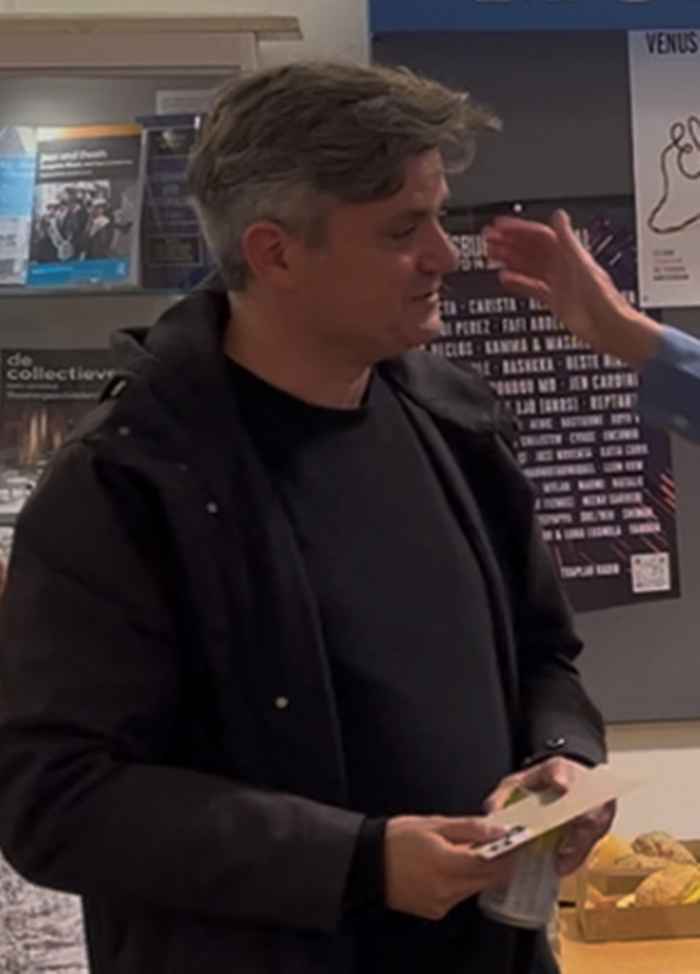
ASCA Article Award: Joost de Bloois, ‘Forest passages’: Narratives of withdrawal and ecological thought. Social Science Information.
We live under the sign of climate crisis: rising temperatures, mass extinction, burning forests, flooded cities. Land, sea and air are threatened on all scales. And at the center of this crisis are we, humans – destructive, extractive, and increasingly exhausted.
With this comes a relentless imperative: to “act now,” to save what can still be saved. But what if we ask a more unsettling question: what if this very call for action is itself part of the problem?
We also live in a time of overload and fatigue: climate reports, rolling crises, endless streams of information, alongside a growing sense that our modern political scripts have somehow “run out of steam” (Latour). This resonates with Latour’s claim that “we have never been modern”, and perhaps also with Bartleby’s quietly subversive response “I would prefer not to”.
This year’s winning article takes this ambivalence seriously. Rather than searching for yet another politics of acceleration or solutionism, it explores what it calls a “politics of withdrawal”: gestures of retreat, refusal, shelter, and recalibration that unfold around figures such as the hut or the forest. Withdrawal here is not escapism or quietism, but a risky attempt to loosen our attachment to the technocratic and extractivist logics that produced the crisis itself. In this sense, the article asks whether ecological thought may require not simply new solutions, but different ways of inhabiting the world beyond the exhausted political scripts of modernity — while remaining attentive to the dangers of nostalgia and reactionary regression.
Precisely because this article captures these tensions with such conceptual richness and offers such a provocative language for our ambiguous present, we are delighted to present this year’s Best Article Award of our research school to Joost de Bloois, for the article “Forest passages: Narratives of withdrawal and ecological thought.”

ASCA Book Award: Laura Vermeeren, Ink Studies: practices of everyday calligraphy in contemporary China. NUS Press, 2025
This year’s winner of the ASCA Book Award brings together ancient tradition and modern media in an innovative and deeply engaged way. It asks us to think about how writing and art interact through a practice with deep roots, which is being transformed and reinvented in the context of a changing society and the growth of digital culture. It is a study with broad societal implications but also, in the best traditions of ASCA, is deeply personal, tracing an experiential journey of its author as much as a line of conceptual development.
I am delighted to present this year’s award to Laura Vermeeren for the book Ink Studies: Everyday Practices of Calligraphy in Contemporary China, published by the National University of Singapore Press. During on her own experiences of learning calligraphy, Vermeeren takes us through five different ways of ‘doing calligraphy’ in modern China. What was once an elite and exclusive practice of a relatively small group of men, she shows us is now opening up to new people and new artistic and creative modes, but nonetheless remains shaped by its long history.
Ink Studies takes us from the process of learning calligraphy, with its links to discipline and imitation of respected traditional styles, to the everyday and playful art of ‘water calligraphy’, practised in parks across China each morning. She shows us ways that calligraphy seems to be loosening its connection to the characters on which it is based, and how it is being remediated via apps and the ubiquitous digital infrastructure of modern China. She also asks shows some of the ways in which calligraphy crosses over between art and advertising, shaping the modern urban environments of China today.
The committee were deeply impressed with the depth, diligence and inventiveness of Vermeeren’s work, which is itself a work of mediation between past and present, art and writing, social structures and individual experiences. We are very pleased to present the award to Ink Studies.