Homo Academicus - Homo Politicus
- Date
- 2 October 2026
- Time
- 11:00 -12:30
- Location
- Bushuis/Oost-Indisch Huis
- Room
- Room F001
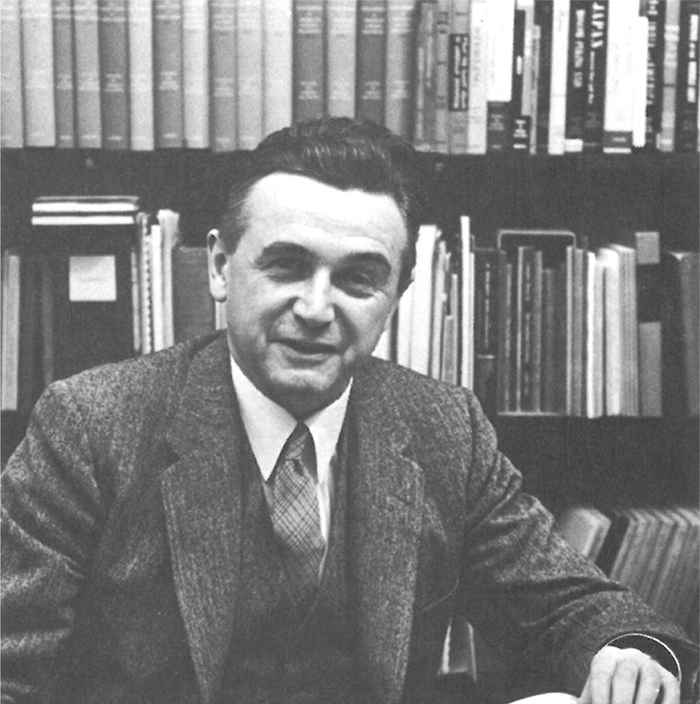
Philip Edward Mosely (1905-1972) has been remembered as the “the Cold War’s organization man.” A famous Sovietologist, he was at the center of shaping what came to be known as Russian, Soviet and East European area studies. Yet, the praise for his administrative talents has overshadowed his early scholarly contribution, his work on diplomatic history but especially his analysis of ethnographic materials he collected in the 1930s in the Balkans. Indeed, he emerges as an excellent anthropologist avant la lettre, having crisscrossed the Balkans (Romania, Bulgaria, Yugoslavia, Albania), after receiving a primary ethnographic training at the Bucharest School of Sociology created by Dimitrie Gusti. Based on a careful study of the extensive Philip E. Mosely Collection at the Archives of the University of Urbana-Champaign and the Mosely papers held at the Rare Books & Manuscript Library of Columbia University in New York, this project (and talk) aims is to rectify this imbalance.

Maria Todorova is the Gutgsell Professor of History Emerita at the University of Illinois Urbana-Champaign. Educated in Bulgaria (PhD) with specializations in France, UK, Russia, Greece, et al, she is the author (in English) of Imagining the Balkans (1997, 2009); Bones of Contention: The Living Archive of Vasil Levski and the Making of Bulgaria's National Hero (2009); Balkan Family Structure and the European Pattern: Demographic Developments in Ottoman Bulgaria (revised edition, 2006); Scaling the Balkans: Essays on Eastern European Entanglements (2018); The Lost World of Socialists at Europe's Margins: Imagining Utopia (2020), The Balkans: Mission Possible (2026), apart from publications in Bulgarian , Russian, German and French. She led large scale international research projects resulting in several edited and co-edited volumes: Balkan Identities: Nation and Memory (2002); Remembering Communism: Genres of Representation (2010); Postcommunist Nostalgia (2010); Remembering Communism: Private and Public Recollections of Lived Experiences in Southeastern Europe (2014). She has held awards from the Guggenheim Foundation, The Wissenschaftskolleg zu Berlin, the National Humanities Center, the Woodrow Wilson Center, The Institute for Human Sciences, Vienna, and is the recipient of honorary degrees from the European University Institute in Italy, University of Sofia, Panteion University in Greece, and Fan Noli University in Albania. She received the Distinguished Contributions to Slavic, East European and Eurasian Studies Award (2022) and was elected member of the American Academy of Arts and Sciences (2022).