Scientific Communism Meets Storytelling: Political Literacy and the Idiom of Conspiracy in the Cold War Soviet Union
- Date
- 28 October 2026
- Time
- 16:00 -17:30
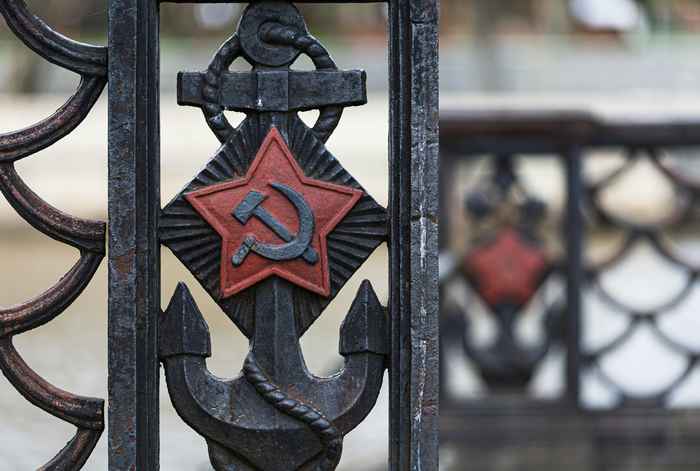
In the political and cultural landscape shaped by the devastation of World War II, Soviet authorities embarked on an effort that may sound counterintuitive against the prevailing image of Stalinism: a large-scale campaign for scientific and political literacy that was launched in 1947 and lasted through 1991. This campaign created an immense infrastructure that permeated postwar Soviet society with popular narratives of science, medicine, history, and politics, among other fields of knowledge. Within this campaign, political literacy was frequently taught under the formal banners of “scientific communism” and “Marxism-Leninism.” Yet the actual vernacular of political literacy that emerged from this propaganda system shifted away from orthodox Marxist explanations rooted in class struggle and economic determinism toward more engaging narrative forms. Conspiratorial interpretations with their language of secret operations, global plots, and political vigilance as a virtue proved particularly persuasive for narrativizing international politics. By the time the Soviet Union collapsed in December 1991, several generations of its citizens had been systematically trained to privilege hidden agency and secret causality to explain political reality.
Alexey Golubev is Associate Professor in the Department of History at the University of Houston, where he teaches modern Russian and European history. He received his Ph.D. from the University of British Columbia, held research fellowships at the Harvard Radcliffe Institute and the University of Toronto, and previously taught at Petrozavodsk State University in Russia. He is the author of The Things of Life: Materiality in Late Soviet Russia (Cornell University Press, 2020) and, with Irina Takala, The Search for a Socialist El Dorado: Finnish Immigration from the United States and Canada to Soviet Karelia in the 1930s (Michigan State University Press, 2014). His current projects examine early Soviet anticolonial historiography and the public communication of science and politics in the Cold War USSR.
Organized and moderated by Boris Noordenbos & Gulnaz Sibgatullina