Narrative, World, Anthropocene
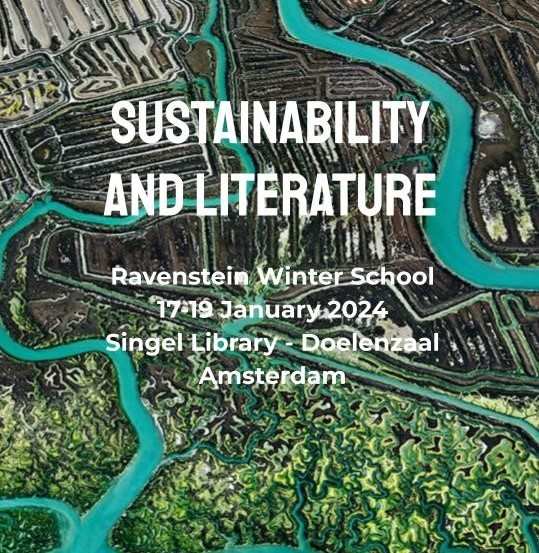
The OSL Ravenstein Winter School 2024 on Keynote lecture by Erin James, University of Idaho | "Sustainability and Literature: Indigenous Knowledge, Infrastructures, Narrative” at the UvA presents three keynote lectures open to the public. | Wednesday 17, January 2024, 16:00-17:00 | Doelenzaal at UB Singel Library
Event details from: Narrative, World, Anthropocene
- Date
- 17 January 2024
- Time
- 16:00 – 17:00
- Room
- Doelenzaal
This past July, the Anthropocene Working Group (AWG) pointed to a small, little-known lake in Ontario, Canada, as ground zero for a new geological epoch. Because of the unique shape and size of Crawford Lake, the sediment at its bottom has remained undisturbed as it has accumulated over the past centuries. A sampled core of that sediment thus provided AWG scientists with a clear “golden spike” of the Anthropocene; plutonium isotopes from early-1950s Hydrogen bomb testing, they argue, signify a sharp shift from the Holocene to a new epoch in which humans are directly—and visibly—leaving their mark on the planet.
As a scholar of narrative, I am fascinated by this declaration that the Anthropocene, by definition, is a concept that hinges upon humans writing the world. The scientists of the AWG root their understanding of our current epoch in a specific physical marker, a semiotic sign that records the ability of humans to reshape the material world in which we live. The AWG’s definition of the Anthropocene depends upon the recognition that (some) humans in this epoch literally write the world in our own image and inhabit that changed reality. I understand narratives, too, as records of humans writing and inhabiting worlds for some purpose. My work is driven by the work that narratives demand of us—the cognitive, imaginative, and emotional work that goes into interpreting the stories we read, watch, listen to, and tell. Cognitive scientists and narrative scholars that study this work argue that, to interpret a narrative, we must mentally model and imaginatively transport ourselves to the world of the story; we must shift from the here and now of our actual world to the alternate world of a story to understand a narrative. This research argues that worldbuilding and inhabitation is essential to narrative comprehension.
I explore the connections between the world-building power narrative and the built world of the Anthropocene in this talk, proposing a new approach to both that foregrounds the following questions: what type of worlds do specific narratives encourage readers to model? What attitudes, values, and behaviors do these worlds rely upon and assume? What relationship between humans and their environment do these stories assume? What role do the values, attitudes, and behaviors of these storyworlds play in driving the anthropogenic climate change that defines the Anthropocene in the real-world? And, crucially, how do the worlds of these narratives foreclose, suppress, or deny other, alternate worlds that rely upon other, alternate attitudes, values, and behaviors?
Organized by Michael Boyden, Jeff Diamanti, Doro Wiese