Afrovibes Festival Discourse Program 2026
- Start date
- 28 September 2026
- End date
- 2 October 2026
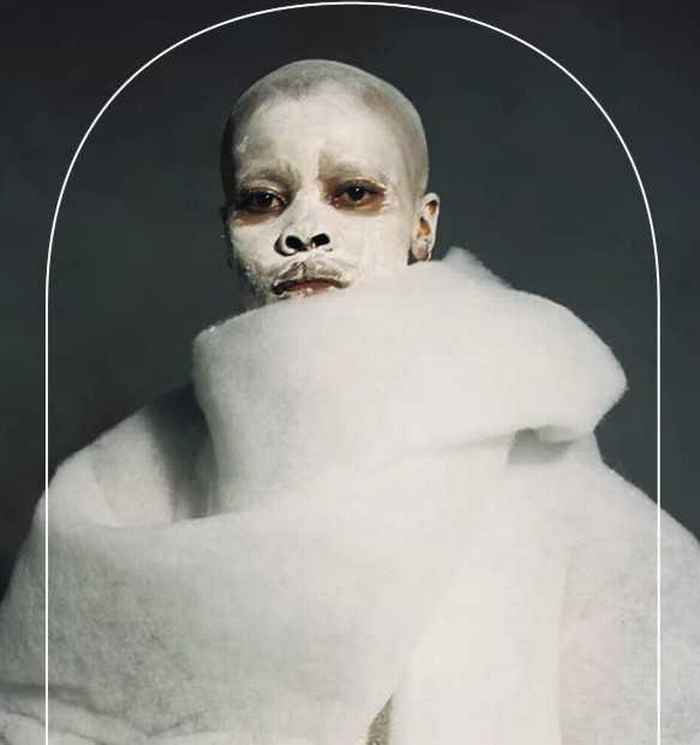
Afrovibes Festival is partnering with the Amsterdam School for Cultural Analysis (ASCA) and the Department of Theatre Studies at the University of Amsterdam for a series of discourse events tied to this year's festival theme, Soil | Soul. Across a keynote lecture and two panels, held on 28 September and 2 October at the University Theatre, artists and curators from Afrovibes will join UvA students and faculty to discuss land, ancestry, and knowledge from African perspectives. All events are free and open to the public.
Keynote Lecture — 28 September, 16:30–18:00
Rooted Practice: How Afrovibes Curates from the Soil Up by Jay Pather
The theme of this year’s festival , soil | soul considers how land has become increasingly utilitarian and transactional, the cause for ongoing war, and displacement of thousands globally. Unchecked extraction has also turned our world into an increasingly vulnerable place. In African worldviews, the land is a sacred, spiritual entity rather than a mere economic commodity, a link between the living, the dead, and the unborn. It serves as a repository for ancestral spirits, where rituals, ancestral graves, and sacred natural sites all maintain ecological, cultural, and cosmological harmony.
Contemporary African artists have increasingly turned their art practice to land, home and heritage bringing contemporary forms to ancient wisdom. This understanding is given another inflection in this moment: for centuries, the Mercator projection rendered Africa smaller than it is, a cartographic distortion that mirrors broader patterns of wilful diminishing. As the United Nations moves to correct this misrepresentation, the question of how Africa is seen, and by whom, becomes newly urgent. Pather reflects on how this moment shapes curatorial practice, how the Soil | Soul theme emerged from listening to the artists themselves, and how curation becomes an act of custodianship: holding, shaping, and transmitting what the work carries, while navigating the institutional and geopolitical forces that continue to push against it.
Using an audio visual presentation of soundscape, video and images, Pather also presents a proposal for a new grammar of curation and searches for ways to bridge gaps in how one takes care of ideas of social justice, of artists, real time art, thematic underpinnings and diverse audiences.
Panel 1: 2 October, 13:00–14:30
The Body as Archive: Embodied Knowledge, Lineage, and the Griot Tradition
In many African worldviews, the soil is not inert ground but a living site of memory, ancestral knowledge, and belonging. This panel asks how that understanding is carried and transmitted when land is lost, disrupted, or left behind—and proposes the body as one answer. With reference to the work of Nadia Beugré (Ivory Coast), Yonela Makoba (South Africa), and Fatou Cissé (Senegal), all presented at Afrovibes 2026, the discussion examines practices rooted in matrilineal spiritual lineages and the griot tradition. What does it mean to hold an archive in the body? How does artistic practice root itself in soil and what happens to that rootedness when the ground shifts?
The panel features Nadia Beugré, Yonela Makoba and Fatou Cissé and is moderated by Leil El Maslouhi.
Panel 2 : 2 October, 15:00–16:30
Soil as Source: Extraction, Citation, and Knowledge from the Global South
Afrovibes 2026 asks what happens when people are separated from their origins—from the soil that carries their memory and identity. This panel extends that question into the domain of knowledge and artistic practice. Africa has long been treated as a source to be extracted from: land, labour, and now ideas. Practices rooted in African soil are absorbed into other contexts, reframed, and circulated without acknowledgment, as raw material, not cited knowledge. Drawing on the works presented at this year's festival, the panel asks how we might move from extraction to genuine exchange, and what it means to cite—to recognize and credit—the ground from which a practice grows.
The panel features Florent Mahoukou, Abdoulaye Trésor Konate, Jennifer Tosch and is moderated by Leil El Maslouhi.