Call for Papers:: ACTIVATING THE ARCHIVE Audiovisual Collections and Civic Engagement, Global Collaboration and Societal Change
Audiovisual Collections and Civic Engagement, Global Collaboration and Societal Change Amsterdam, The Netherlands | 4-7 June 2023 Eye Filmmuseum | www.eyefilm.nl/conference Deadline for Submissions:: 13 January 2023
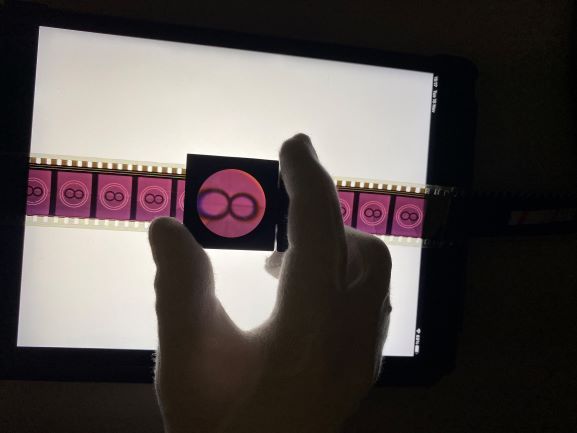
On 4-7 June 2023, Eye Filmmuseum and the University of Amsterdam will present the 8th Eye International Conference this time with the topic ‘Activating the Archive: Audiovisual Collections and Civic Engagement, Global Collaboration, and Societal Change’.
The annual Eye International Conference is an opportunity for scholars, archivists, curators,
filmmakers, students, artists, and film enthusiasts from across the world to gather together and explore contemporary professional and academic issues affecting audiovisual heritage today.
Following the first Activating the Archive conference in 2018, which looked at how audiovisual archives can stimulate people to engage with specific social and political causes, or support the efforts of advocates and activists, this second edition seeks to continue and expand this conversation by asking how audio-visual collections can be used and created as communal resources, through global and local projects and collaborations, from the stage of their inception to that of their re-appropriation, from inside as well as outside the archive. Within this scope, the 2023 Activating the Archive edition is seeking contributions that cut across different fields, practices and regional contexts, to reflect a diverse array of approaches to collaboration and community-based audio-visual archiving.
The 2022-2023 academic year also marks the twentieth anniversary of the Master’s in Preservation and Presentation of the Moving Image (P&P), a programme of the University of Amsterdam in collaboration with Eye Filmmuseum, the Netherlands Institute for Sound and Vision, the Living Media Arts foundation (LIMA), and many other institutions worldwide that have hosted P&P students for their internship. The conference will provide an opportunity to celebrate this milestone.
The programme committee is calling for proposals that address the following topics and questions:
● Agency and resistance in or through audio-visual archiving and the (re)use of archival collections
● Audiovisual archives as a resource for citizen engagement and advocacy
● Curatorial strategies to enable social impact through archival material
● Varieties and models for archival activism
● Cooperation and exchange (both on global and local level) between archives and various
groups of stakeholders and users (e.g. researchers, filmmakers, activists) and ways of
fostering those
● The growing significance of grassroots and community archives and their specific ways of involving stakeholders
● Varieties of/models for community archiving
● Archives, museums, and presentation platforms (e.g. festivals, video-sharing websites and online repositories) as facilitators of engagement
● Discrimination, bias, and inequality in archival and presentation practice, and ways of counteracting those
● Threats to archival autonomy, and how to resist them
● Conflicts of interest between archival stakeholders, and how to overcome them
● The politics of linked open data (LOD) and wikidata, and data sharing as a means of civic
engagement.
● (Community-based) archival-scholarly collaboration and digital methods including (but not limited to) collaborative annotation and transcription of digitized materials, creation of databases and resources
● The societal (e.g. environmental) implications of archival sustainability
● Strategies for funding and financial sustainability of alternative archival practices
● DIY practice and (socio-economic/political) issues in archival labour
● The legal (rights management) and ethical (privacy) implications of collecting and reusing audio-visual records of social movements and various forms of dissent
We encourage proposals from participants, archives, regions, and topics that are underrepresented in conferences related to audiovisual heritage.
Presentation formats
We welcome presentations in a wide range of formats, including the following:
* Report or Paper Presentation. 15-20-minute report/paper presentation plus 5 minutes for Q&A.
* Panel. A 50-minute session consisting of a panel of 3-4 individuals who discuss a variety of theories or perspectives on a given topic. Panels consist of 40 minutes of presentation with 10 minutes of Q&A.
* Show-and-tell. A 10-minute short presentation of a case study or archival material with 5 minutes of Q&A.
* Roundtable Discussion. A 50-minute session of informal presentations on a general subject area, where participants share what they know. Proposals in this category ideally include a facilitator who moderates the discussion.
* Screening Session. A 50-minute presentation which includes a screening. The session may include speakers/discussion but the screening portion should be a minimum 35 minutes.
*Artistic Interventions/Performative Lecture. A maximum 50-minute presentation/performance.
The session may include speakers/discussion but the performance/intervention portion should be a minimum of 35 minutes.
* Poster Presentation. A 5-minute pre-recorded session with a poster image. The poster image will be posted on the conference website. Posters are scheduled five per session slot and all poster presenters are required to participate in the live Q&A during their session.
* Evening Screenings. A film programme or a single feature film, with a short introduction.
-> The programme committee may discuss with presenters appropriate alteration of a format or duration when this makes curatorial sense for the programme as a whole.
-> There is a possibility to accommodate a number of live streamed or recorded video
presentations by speakers who may be unable or choose not to travel.
-> The conference will be recorded for live streaming and online sharing through Eye’s platforms. By sending in a proposal you agree to this possibility.
-> All proposals must be sent in English. However, there is a possibility to accommodate presentations in other languages, for example in the form of pre-recorded video with English subtitles, should this be clearly requested by prospective speakers in their proposals.
How to apply
You can submit your proposal online at www.eyefilm.nl/conference. A proposal should include the following:
*A description (400 words) for the reviewers with information about the topic and why the session is important to be included in the programme. It should also identify AV materials by title, format, and duration.
*An abstract (150 words) that will appear in the conference programme and online if your
presentation is accepted.
*A short bio (50 words) for each speaker.
*Images (for which the copyrights are cleared).
*Image captions.
*Screener (only applicable for screening session or evening screening proposals).
Deadline: 13 January 2023.
Registration
The conference will take place in hybrid form to accommodate everyone. There will be a separate registration fee for in-person and virtual participation. Please note: It's compulsory for all speakers to register for the conference. We are unable to offer any financial compensation and/or waive registration fee. However, speakers might apply for one of the limited number of
travel grants available.
Travel Grant Programme
Eye has a travel grant programme for accepted speakers of the Eye International Conference. The grants, up to €500 each, can be used to partially offset registration and travel costs. To apply, please submit a brief motivation (no more than 500 words) addressing the financial need for the award, as well as how your presence at the conference will contribute to your professional development. Email your application by January 6, 2023, to conference@eyefilm.nl, using the term ‘Travel Grant’ in the subject header. The travel grant programme is only open for speakers of the Eye International Conference 2023.
Schedule
The Eye International Conference 2023 will take place in Amsterdam, from Sunday 4 June to Wednesday 7 June 2023.
Participants are also invited to two annual side events:
* Meet the Archive, an afternoon public programme highlighting recent projects from the Eye Collection) on Saturday 3 June;
* Open House at the Eye Collection Centre, a programme of guided tours, presentations,
demonstrations and discussions, on Wednesday 7 June.
Programme committee
● Giovanna Fossati (Eye/University of Amsterdam)
● Anne Gant (Eye)
● Eleni Tzialli (Eye)
● Christian Olesen (University of Amsterdam)
● Asli Özgen-Havekotte (University of Amsterdam)
● Floris Paalman (University of Amsterdam)
This event is organised by Eye Filmmuseum in collaboration with the University of Amsterdam (UvA) and is supported by Amsterdam School for Cultural Analysis (ASCA), Amsterdam School for Heritage,
Memory and Material Culture (AHM) and Netherlands Institute for Cultural Analysis (NICA).
For more information: www.eyefilm.nl/conference, email: conference@eyefilm.nl