“What of the Future?”: Affect, Media, and the Desire for Foreknowledge
Master Class and English Department Lecture by Aleks Prigozhin organized by Michael Miller and Nicholas Carr | Thursday, 11 December––17:00-18.30, P.C. Hoofthuis 3.01, Spuistraat 134
Event details from: “What of the Future?”: Affect, Media, and the Desire for Foreknowledge
- Date
- 11 December 2025
- Time
- 17:00 – 18:30
Masterclass: 13:00-15:00 (Masterclass); 17:00-18:30 (Lecture)
Location: University of Amsterdam, Oudemanhuispoort C0.17 (Masterclass) and PC Hoofthuis 3.01 (Lecture).
Organizers: Dr. Nicholas Carr (Assistant Professor of Literary and Cultural History, University of Amsterdam), Dr. Michael Miller (Lecturer, English Language and Culture, University of Amsterdam)
Contact & registration: n.d.carr@uva.nl
Credits: 1 ECTS
These two events with Dr. Aleksandr Prigozhin focus on how media practices (including the arts and literary / cultural / critical theory) articulate ideas of the common life with the idea of the imminent future, as related objects of desire as well as critique. Starting from interdisciplinary readings of British modernist texts, our conversation will move into a more general discussion about the value of reading the intersections between affect, media, and form as we face highly uncertain futures. Interested graduate students and scholars from all fields are invited to take part.
In the graduate masterclass we will read the Introduction and Chapter 5 of Dr. Prigozhin’s forthcoming book, Modernism, Media, and the Politics of Common Life (Johns Hopkins University Press 2025). The book explores how modernist fiction responded to its changing media environment in the early twentieth century. Modernist writers used diverse forms of media, broadly conceived—from print, architecture, and radio to soil and infrastructure—as metaphors for the contradictions of common life, while highlighting both the promises and failures of media modernity. Modernist texts like Mrs. Dalloway, The Secret Agent, and Party Going grapple with the challenges of mass democracy, imperial decline, and the growing ubiquity of media communication, while offering a nuanced vision of the difficulties of mediated human connection.
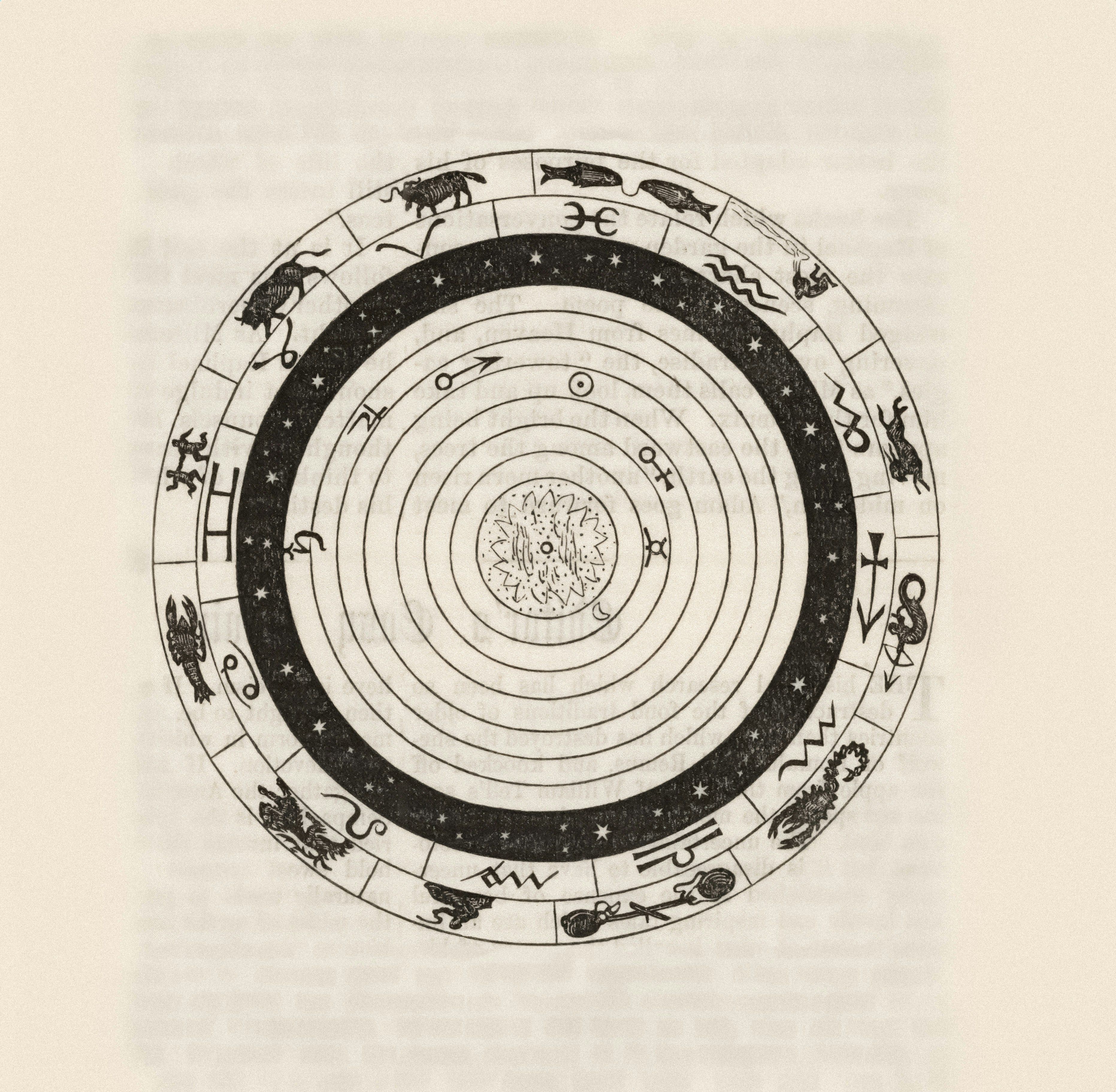
This masterclass will be followed by a lecture, open to the public, titled “What of the Future?”: Affect, Media, and the Desire for Foreknowledge.” The talk analyzes the rise of mass newspaper astrology, and the reactions to it by progressive intellectuals, as related responses to uncertain times. In the late interwar period of the 1930s—as now—massive changes in media, economy, and politics generated a broadly shared anxiety about the imminent future. A popular expression of this anxiety was an interest in astrology and fortune-telling, which reached new heights in this period with the birth and proliferation of the weekly star-chart column. In responding to this phenomenon and to the underlying anxiety about where history was going, progressive intellectuals like Charles Madge and Tom Harrisson, Walter Benjamin, and Georg Lukács reckoned with the rise of fascism and with the problem of (the desire for) foresight that is a component of modernity as much as of the “archaic” or superstitious belief that modernity was supposed to have overcome. Inadvertently, they also give rise to a tradition of affective historicism that continues to this day in the works of Lauren Berlant, Jonathan Flatley, and others. The talk is particularly interested in the arguments made in the 1930s—and now—on behalf of the arts as offering unique insight into what is just around the bend—the imminent, near future.
Aleksandr Prigozhin researches the media imaginaries, affective structures, and materialities that underlie artistic remediations of history in 20th century literature and culture in English and Russian. He is the author of Modernism, Media, and the Politics of Common Life, and his work has appeared or is forthcoming in NOVEL: A Forum on Fiction, Twentieth-Century Literature and Modern Fiction Studies. He has taught English and Comparative Literature at Utrecht University and the University of Denver, and is currently an Affiliated Scholar at the Institute for Cultural Inquiry (ICON) at Utrecht University.
Credit requirements
rMA students who attend and participate in both the masterclass and the lecture are eligible to receive 1 EC. In order to receive this credit, they will have to: (1) complete the reading (60 pages); (2) prepare three detailed and substantial contributions to the masterclass discussion in response to the reading; and (3) attend and participate on the day.
For further information, to register for the masterclass, and to receive the reading material, please contact Nicholas Carr (n.d.carr@uva.nl).
Lecture: “What of the Future?”: Affect, Media, and the Desire for Foreknowledge
Thursday, 11 December––17:00-18.30, P.C. Hoofthuis 3.01, Spuistraat 134
The talk analyzes the rise of mass newspaper astrology, and the reactions to it by progressive intellectuals, as related responses to uncertain times. In the late interwar period of the 1930s—as now—massive changes in media, economy, and politics generated a broadly shared anxiety about the imminent future. A popular expression of this anxiety was an interest in astrology and fortune-telling, which reached new heights in this period with the birth and proliferation of the weekly star-chart column. In responding to this phenomenon and to the underlying anxiety about where history was going, progressive intellectuals like Charles Madge and Tom Harrisson, Walter Benjamin, and Georg Lukács reckoned with the rise of fascism and with the problem of (the desire for) foresight that is a component of modernity as much as of the “archaic” or superstitious belief that modernity was supposed to have overcome. Inadvertently, they also give rise to a tradition of affective historicism that continues to this day in the works of Lauren Berlant, Jonathan Flatley, and others. The talk is particularly interested in the arguments made in the 1930s—and now—on behalf of the arts as offering unique insight into what is just around the bend—the imminent, near future.
Dr. Aleks Prigozhin researches the media imaginaries, affective structures, and materialities that underlie artistic remediations of history in 20th century literature and culture in English and Russian. He is the author of Modernism, Media, and the Politics of Common Life (Johns Hopkins UP 2025), and his work has appeared or is forthcoming in NOVEL: A Forum on Fiction, Twentieth-Century Literature and Modern Fiction Studies. He has taught English and Comparative Literature at Utrecht University and the University of Denver, and is currently an Affiliated Scholar at the Institute for Cultural Inquiry (ICON) at Utrecht University.