Current Issues with John MacMurphy
John MacMurphy will be the speaker of this month's Current Issues seminar. The seminar is titled: "Who’s Afraid of Kabbalah Ma’asit?"
Event details from: Current Issues with John MacMurphy
- Date
- 8 April 2024
- Time
- 15:00 – 16:30
- Room
- Belle van Zuylenzaal
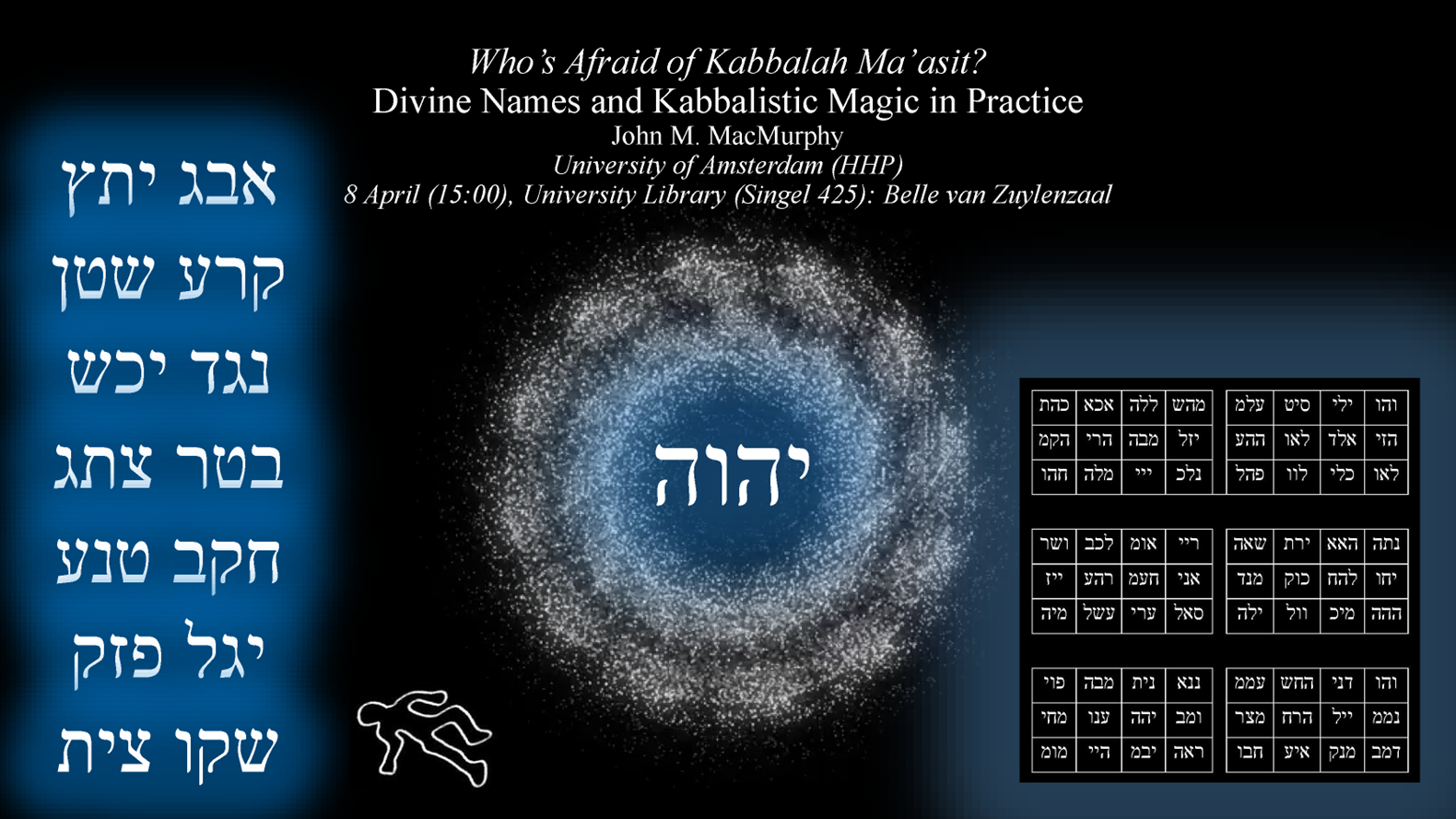
This presentation explores the use of divine names, particularly in kabbalistic praxis. The objective includes not only an elucidation of the theory and associated applications of this technology but also an investigation into its origins and reception.
The plethora of divine name references, sometimes termed Shem ha-Mephorash, can be initially gleaned from the vast number of biblical words that refer to God. However, we also see many non-semantic sequences of letters (nomina barbara), as well as various visual representations that point to the same phenomenon. Apart from magical uses, these depictions were also utilized in meditative applications that, in some cases, crossed over to the normative liturgical Jewish praxis. This is exemplified in the yichudim, or “unifications” and kavanot (intentions) practices that involve contemplations over nomenclatures that are combined. Similar methods can be seen in Christian kabbalistic circles as illustrated in the portrayal of the pentagrammaton, championed by German humanist Johannes Reuchlin (1455-1522).
Common arrays of divine names include the 72-letter name of God. Popular in amulets, the reputation of this articulation precedes itself as it is said that Moses used it to part the Red Sea. Though this arrangement is mentioned already in antiquity, only during the Middle Ages do we see elucidations of its formulation and variations. Later on in the early modern period, we can observe numerous ways of working with such figurations, including the magical use of biblical phrases that contain these character combinations believed to be secreted in the text. In addition, these forms were used to unveil (or possibly derive) the nomenclature of hidden angelic entities out of each set.
Another common configuration is the 42-letter form. Its most intriguing and unique aspect has to do with its deadly applications. Kabbalistic literature elucidates several accounts from biblical narratives where such methods were employed by revered personalities including the prophet Elisha, as well as Moses. These procedures were so secretive that during World War II, Gershom Scholem, the father of modern academic study of Jewish Mysticism was approached by a group of kabbalists so that he could instruct them on how to execute these powerful operations on Hitler.